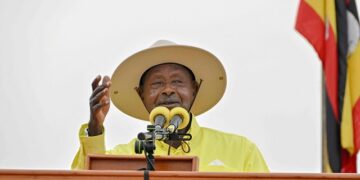












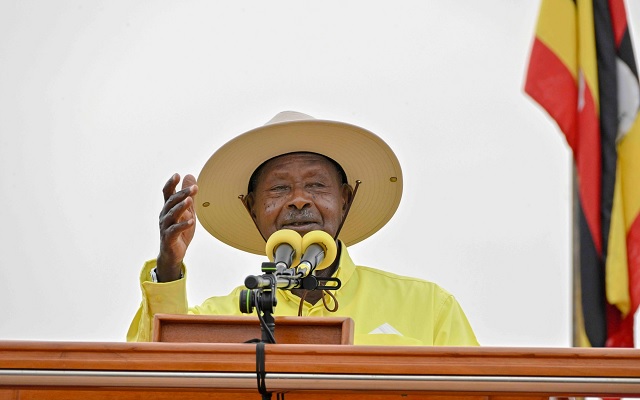
KAMPALA, UGANDA 26 January 2026— President Yoweri Tibuhaburwa Kaguta Museveni has formally petitioned the Supreme Court to dismiss a challenge to his recent re-election, asserting that the January 15, 2026, polls were free, fair, and conducted in strict accordance with Ugandan law.
In a comprehensive 19-page affidavit filed on January 26, 2026, the President—represented by K&K Advocates—denied all allegations of electoral malpractice brought forward by petitioner Robert Kasibante of the National Peasants’ Party. Museveni, who was declared the winner on January 17 with 7,946,772 votes (71.65% of the valid cast), maintains that any alleged non-compliance did not “substantially affect” the final result.
Defense Against Allegations of Violence and Bribery
The President’s response systematically addresses several key grievances raised in the petition:
State Violence: Museveni denied directing armed forces to inflict violence on candidates or supporters. He stated that security was managed by the Uganda Police Force, with support from the UPDF, specifically to ensure a “secure electoral environment”.
Voter Bribery: The affidavit specifically refutes claims that prominent supporters, including musician Moses Ssali (alias Bebe Cool) or the “Unstoppable Campaign Team,” bribed or induced voters with the President’s knowledge or consent.
Misuse of Resources: Museveni asserted that government facilities used during the campaign were strictly limited to those ordinarily attached to the office of the President, as permitted by the Presidential Elections Act.
Questions of Jurisdiction and Evidence
The 1st Respondent’s legal team argued that several parts of the petition are “incurably defective” and should be struck out. Specifically:
Vagueness: Museveni’s team contends that many allegations—including those regarding the “refusal to nominate qualified candidates”—fall outside the Supreme Court’s jurisdiction for challenging a presidential election.
Strict Proof: The President challenged the petitioner to provide “strict proof” for claims regarding the failure to compile a credible voters’ roll and the alleged misuse of Biometric Voters’ Verification Identification Machines.
Media Equality: Addressing claims of media bias, the President maintained that all candidates were accorded “equal treatment” on state-owned media platforms.
Transparency of the Tallying Process
The affidavit further defends the Electoral Commission’s conduct, stating that there was no “interference” or “direction” from the President or other high-ranking officials like the Speaker of Parliament. Museveni emphasized that the counting and transmission of results were done “transparently” and “in full view of the candidates or their agents”. He also clarified that results were verified and declared within the constitutionally mandated 48-hour window.
The Supreme Court is now expected to set a date for the hearing of the petition, which remains the primary legal hurdle to Museveni’s seventh term in office.