















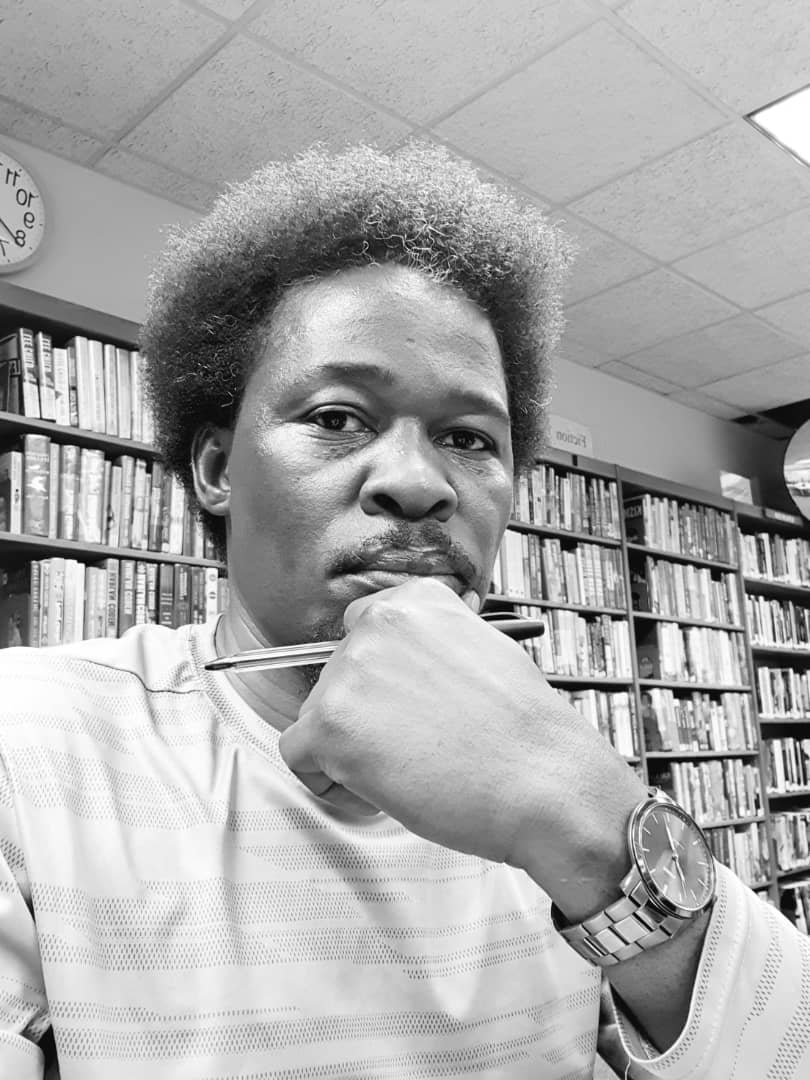
By Gyagenda Semakula Zikusooka Ssajjabbi
Uganda presents a peculiar and enduring phenomenon that may be described as the “mystery of two”—the persistent emergence of parallel structures within political parties, religious institutions, and even sporting bodies and organizations. The “Mystery of Two” is not a political science hypothesis or theory. It is a casual saying that I coined over a decade ago in my practice as a journalist.
This was in the wake of endless parallels in Uganda. There was a time when we had FUFA Magogo and FUFA Dan Walusimbi, the Uganda Premier League and the Uganda Super League, Grand Mufti at Old Kampala and Supreme Mufti at Kibuli, FDC Katonga and FDC Najjanakumbi, DP Mao and DP Lukwago, NRM Kyaddondo and NRM Kololo (JPAM), CP Lukyamuzi and CP Walyemera, UPC Akena and UPC Otunnu, and now NUP Kavule and NUP Kabowa. The list goes on. Can we so easily forget the once “mighty” UTODA Katongole that fell like a house of cards at the emergence of Mayambala’s parallel; DACA?
Uganda’s so-called “mystery of two” is not really a mystery. It is the predictable outcome of a political landscape where parallel centres of opposition emerge, compete, and sometimes neutralise one another. As the country engages in the post 2026 elections conversations, the defining feature is not simply the endurance of the NRM’s ruling order, but the persistent fragmentation of opposition politics into multiple tracks—each claiming legitimacy, yet rarely converging into a single institutional project capable of translating public discontent into formidable electoral power.
This is not merely the existence of opposition, which is normal in democratic life, but rather the reproduction of internal doubles: one party and another party bearing the same historical identity; one religious authority and another claiming equivalent legitimacy; one federation and another running alongside it. The true definition of Uganda Zzaabu!
The recent state house meeting (that has become infamous) between some opposition actors and President Museveni adds a new and important layer to the “mystery of two.” It illustrates that Uganda’s opposition is not only fragmented in electoral strategy, but increasingly divided on the fundamental question of methodology: confrontation versus engagement, resistance versus negotiation.
In principle, dialogue and peace-building are legitimate democratic tools. Any constitutional order should allow political competitors to meet, negotiate, and de-escalate national tensions. In fact, mature democracies elsewhere rely on structured dialogue to prevent post-election tensions from becoming zero-sum crises.
However, in Uganda’s “oxymoron democracy”, moments like these are frequently interpreted as symbols of realignment: when parallel factions emerge, when internal splits widen, when political legitimacy becomes contested not only at the ballot box but within the opposition architecture itself. Such meetings highlight a central reality: in a system where institutions are divided, the centre often remains singular, while opponents multiply.
The Museveni-Nsibambi engagements have exposed the risks of parallel politics. When opposition figures pursue dialogue outside a unified framework, such meetings can be interpreted in two competing ways: either as acts of responsible statesmaship (abazira baffe) or as individualized political bargaining (bread-based) that further weakens collective opposition coherence.
Legally and institutionally, the issue is not whether dialogue is wrong. The issue is whether dialogue is anchored in transparent, accountable, and collective processes. Peace-building cannot substitute for political organisation, and private engagements cannot replace institutional consensus.
Uganda’s Constitution provides for multiparty democracy, yet the operational space for political parties remains contested. Where rules of competition are unevenly enforced, opposition groups are incentivised to operate through informal platforms, splinter movements, or personalised structures that appear more agile but lack sustainability.
Dialogue, in such circumstances, can become less of an institutional bridge and more of a political instrument used selectively, interpreted ambiguously, and absorbed into the logic of parallel politics. The result is duplication, competition, and rivalry.
Uganda’s “Mystery of Two” should be read as a warning shot. Parallel opposition without convergence does not broaden democracy; it disperses it. In a fragmented political landscape, even peace talks and dialogue can become part of the parallel politics — strengthening the appearance of engagement while deepening the reality of division and the status quo benefits from this division.
The Writer is a Journalist /Lawyer/ Church Minister.